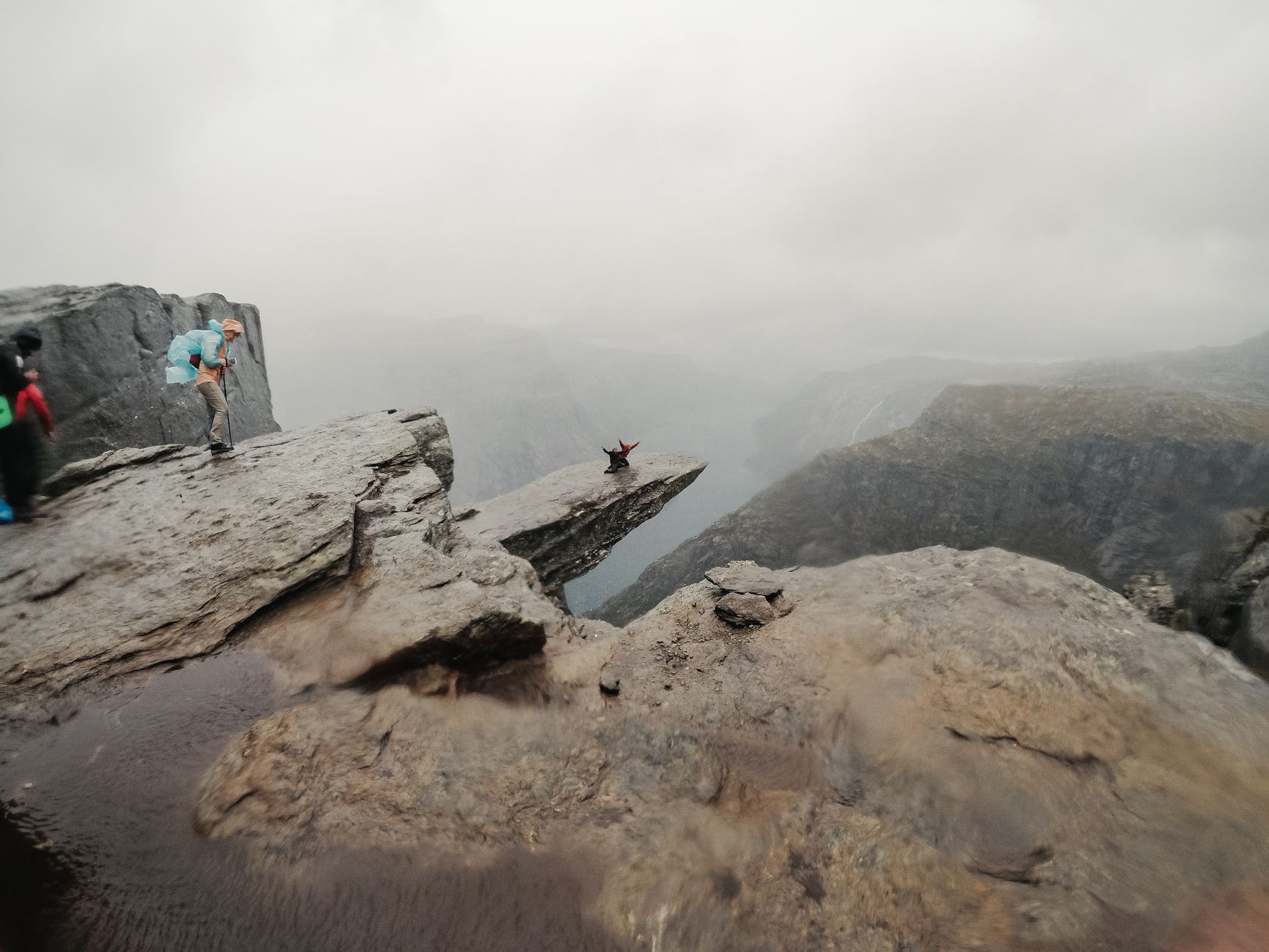
The rain on the Varanger peninsula does not fall; it drives sideways, pushed by squalls arriving straight from the Barents Sea.
In such an environment, your backpack is not an accessory—it is your sole life-support system. Every surplus item carried quickly turns into severe fatigue. Learning to pack for arctic conditions is fundamentally an exercise in honest self-evaluation.
1. The Three Layers of Survival
Forget trendy outdoor fashion. In true subarctic environments, you operate on a strict tri-membrane logic:
- Merino Base: Regulates core microclimates, remains warm even when damp, and resists bacterial odors across multi-day crossings.
- High-Loft Fleece or Down: Traps dead air during stillness, packed away in dry compression sacks the moment climbing commences.
- Hard Shell Membrane: Heavy-denier nylon with taped seams, windproof and impenetrable to driving sleet.
2. Navigational Humility
Modern satellite beacons are indispensable safety mechanisms, yet reliance on glowing touchscreens can blind a traveler to physical cues. When navigating arctic tundras, one must continuously read wind direction, sheep trails, lichen patterns, and stream volumes. True wayfinding is tactile, sensory, and deeply meditative.